
 Juliana — Sales & GTM expert
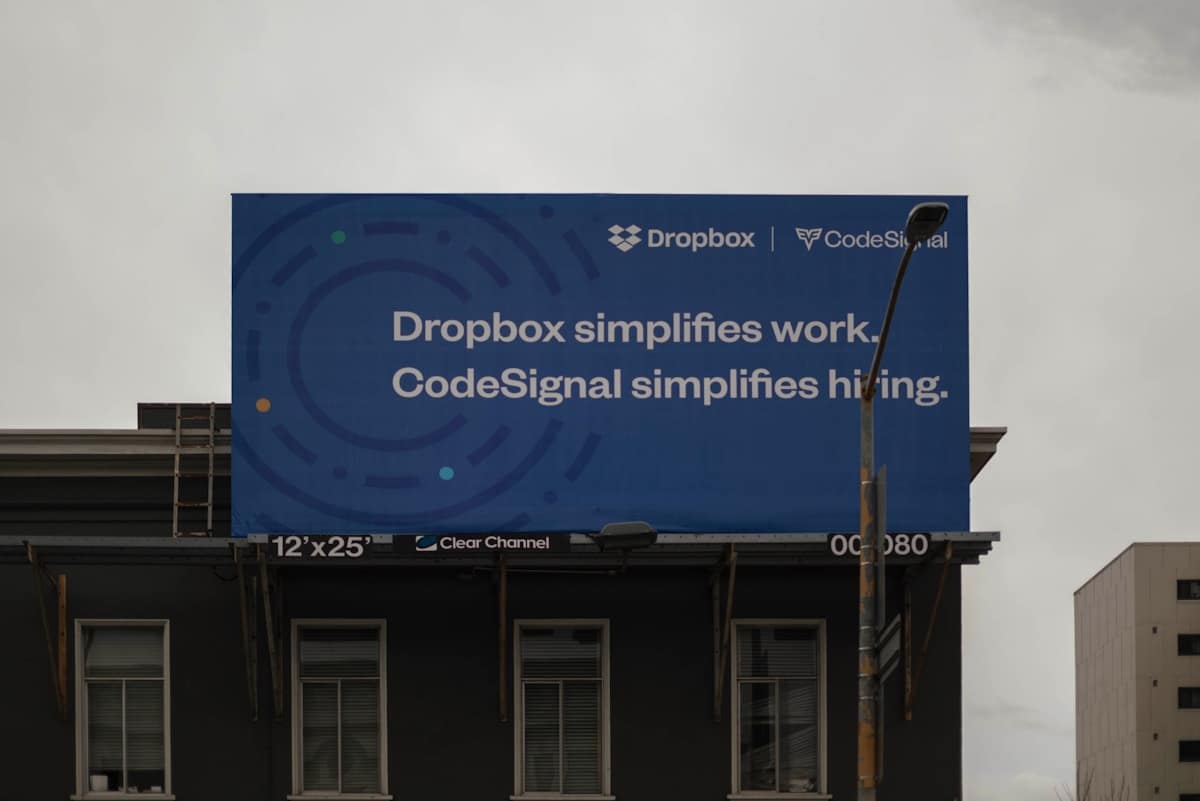
Dropbox is headquartered at 1800 Owens Street, San Francisco, CA 94158 — but since 2020, it has operated as a "Virtual First" company, meaning its physical offices are collaboration spaces, not primary workplaces. If you're selling to Dropbox, prospecting against them, or mapping the competitive landscape for file-sharing and collaboration software, the full picture of where Dropbox operates is more nuanced than a single HQ address.
- Dropbox's official headquarters is 1800 Owens Street, San Francisco, CA 94158 (Mission Bay district).
- Dropbox declared itself "Virtual First" in October 2020 — employees work remotely by default; offices are used for collaboration only.
- Dropbox maintains offices in Austin, Seattle, Dublin, London, Sydney, and Tokyo, among other locations.
- The Virtual First model reduces Dropbox's real-estate footprint significantly — it subleased large portions of its SF headquarters after 2020.
- For B2B sales teams, Dropbox's distributed workforce means decision-makers are spread across time zones, not concentrated in one office building.
Where is Dropbox headquartered?
Dropbox's registered headquarters is 1800 Owens Street, San Francisco, California 94158, located in the Mission Bay neighborhood. The building — a large modern campus — was Dropbox's primary office before the company shifted to its Virtual First operating model in 2020.
Mission Bay is a tech-dense district on San Francisco's eastern waterfront, roughly two miles from the Financial District. It's home to several biotech and technology companies as well as UCSF's medical campus. Dropbox occupies a significant portion of 1800 Owens, though it has subleased portions of that space to offset real-estate costs following its distributed work transition.
For legal filings, procurement contracts, and official correspondence, 1800 Owens Street remains the address of record. Dropbox is incorporated in Delaware, as is standard for US public companies, but its operational headquarters remains in San Francisco.
What is Dropbox's Virtual First model and how does it affect office locations?
In October 2020, Dropbox became one of the first major tech companies to permanently adopt remote work as the default. Under the Virtual First model, employees work from home as standard practice; physical offices — rebranded as "Dropbox Studios" — exist exclusively for in-person collaboration, team offsites, and meetings that benefit from being face-to-face.
This is a structural shift, not a temporary policy. Dropbox sold or subleased large portions of its real estate. In its 2022 annual report, Dropbox disclosed it had subleased approximately 600,000 square feet of office space globally, taking significant impairment charges as it restructured its property portfolio.
"Our Virtual First model fundamentally changes how we think about office space. Offices aren't where work happens — they're where collaboration happens. That distinction shapes every real-estate decision we make."
— Melanie Rosenwasser, Chief People Officer, Dropbox (Dropbox Blog, 2021)
For anyone selling into Dropbox or competing against them, this matters practically: Dropbox employees are distributed across cities and time zones, and procurement decisions are rarely made from a single physical location. Territory mapping based purely on headquarter city will miss a significant portion of the relevant buyer population.
What are Dropbox's office locations worldwide?
Despite the Virtual First model, Dropbox maintains a number of Dropbox Studios — physical collaboration spaces — across the globe. Below is the full directory of confirmed Dropbox office locations as of 2026.
United States
| City | Address | Type |
|---|---|---|
| San Francisco, CA | 1800 Owens Street, SF 94158 | Global HQ / Studio |
| Austin, TX | Dropbox Studio Austin | Regional Studio |
| Seattle, WA | Dropbox Studio Seattle | Regional Studio |
| New York, NY | Dropbox Studio New York | Regional Studio |
International
| City | Country | Type |
|---|---|---|
| Dublin | Ireland | EMEA HQ / Studio |
| London | United Kingdom | Regional Studio |
| Sydney | Australia | APAC Studio |
| Tokyo | Japan | Regional Studio |
| Tel Aviv | Israel | Engineering Studio |
Dublin serves as Dropbox's EMEA headquarters and handles much of the company's European operations, including sales, support, and legal entities for the EU market. This is relevant for enterprise sales reps targeting European accounts — the decision-making chain often routes through Dublin rather than San Francisco.
How many employees does Dropbox have in 2026?
Dropbox has gone through significant workforce reductions since its post-pandemic peak. According to Dropbox investor relations filings, the company employed approximately 2,700 full-time employees as of its most recent annual disclosure — down from over 3,300 at its 2021 high, following a series of layoffs in 2023 and 2024 that reduced headcount by roughly 16% and 20% respectively.
The workforce is heavily distributed. Engineering and product roles are concentrated in San Francisco, Seattle, and Tel Aviv. Sales and customer success teams are spread across Austin, New York, London, and Dublin. Because most employees work remotely, the physical office headcount at any given Studio is a small fraction of the regional employee total.
For B2B sellers, this distribution has a practical implication: LinkedIn prospecting by office location is unreliable for Dropbox employees. Searching by company name and role title is more effective than filtering by city.
How do you find companies that use Dropbox competitors for outreach?
Understanding Dropbox's footprint is useful context — but if you're on the sell side competing against Dropbox (or trying to displace it), the more actionable question is: how do you identify companies actively using Dropbox alternatives like Box, Google Drive, SharePoint, or Egnyte?
The most scalable method is job postings. Companies that reference specific file-sharing or collaboration tools in job descriptions — whether for integration requirements, admin roles, or IT management — are confirmed active users. This signal is public, updated daily, and covers companies of every size. A hiring post for a "Box Administrator" or "SharePoint migration specialist" tells you exactly what that company's current stack looks like.
This is exactly what Stealery was built for: you search a competitor's name, and get a list of companies confirmed to be using it — filtered by company size, geography, and hiring signals — ready to hand off to an SDR sequence. For anyone selling in the cloud storage or document collaboration space, this turns a cold list into a warm one instantly.
According to Salesloft's outreach benchmark data, reps who contact accounts with verified buying signals — including confirmed tool usage — see connect rates 3–5x higher than reps working unqualified lists. Competitor signal is one of the strongest buying signals available in B2B software sales.
What is the history of Dropbox's headquarters and office locations?
Dropbox was founded in 2007 by Drew Houston and Arash Ferdowsi in Boston, Massachusetts, while both were students at MIT. The company relocated to San Francisco shortly after and has been based there ever since.
Timeline of Dropbox HQ moves
- 2007–2009: Early offices in Cambridge, MA and then South of Market (SoMa), San Francisco
- 2011–2017: 185 Berry Street, San Francisco — a large campus in the China Basin neighborhood
- 2017–present: 1800 Owens Street, Mission Bay, San Francisco — purpose-designed campus
- 2020–present: Virtual First declared; 1800 Owens becomes a Studio rather than a mandatory workplace
The move to Mission Bay in 2017 was a significant expansion — 1800 Owens Street is approximately 736,000 square feet across multiple buildings, designed to house thousands of employees. Dropbox signed one of the largest commercial real-estate leases in San Francisco history at the time. The subsequent decision to go Virtual First and sublease much of that space was a notable reversal, and became a widely cited case study in corporate real-estate strategy during the remote-work era.
If you're researching Dropbox for competitive intelligence purposes — understanding how the company has scaled, contracted, and restructured — this real-estate history is a useful proxy for the company's broader headcount and revenue trajectory over the past decade.
Frequently asked questions
Ready to build your first competitor list?
Type in any competitor and see every company using it — filtered by size, location, and hiring signals.
Try Stealery for free →